Cost of Poultry Farming in Zambia
Updated March 2026 · Agriculture & Business
Poultry farming remains one of Zambia's most popular agribusinesses. However, with feed accounting for over 60% of production expenses, tracking the exact costs of day-old chicks, starter feed, and medication is critical to running a profitable farm.
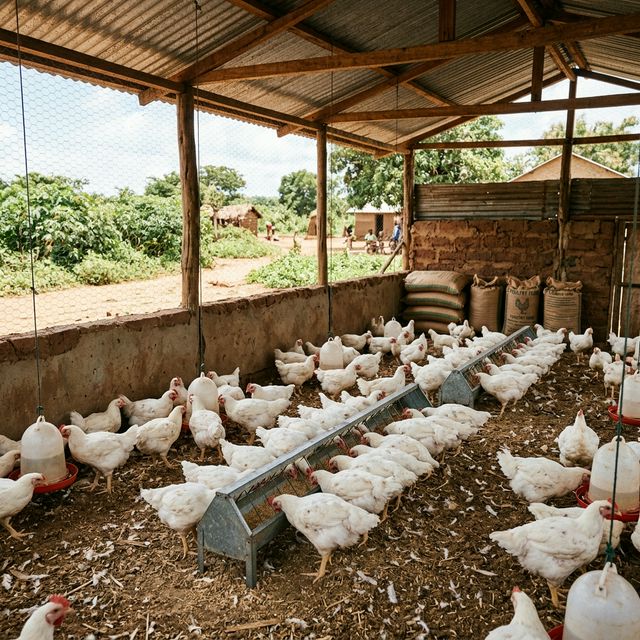
A typical small-scale broiler house in rural Zambia
Broiler Farming Costs (Meat Production)
The estimated 2026 prices for essential inputs required to raise broiler chickens to market weight (at 5-6 weeks).
| Item | Estimated Price (ZMK) |
|---|---|
| Day Old Chicks (Broiler) Tiger Chicks, Ross, etc. | ZMK 18 – 20 per chick |
| Broiler Starter Feed (50kg) Prices depend on brand (Tiger, Novatek) | ZMK 680 – 700 |
| Broiler Grower Feed (50kg) Fed during the growing phase | ZMK 650 – 670 |
| Broiler Finisher Feed (50kg) Fed in the final weeks before market | ZMK 610 – 630 |
| Vaccines & Medication Newcastle, Gumboro vaccines, vitamins | ZMK 2.50 – 3.00 / bird |
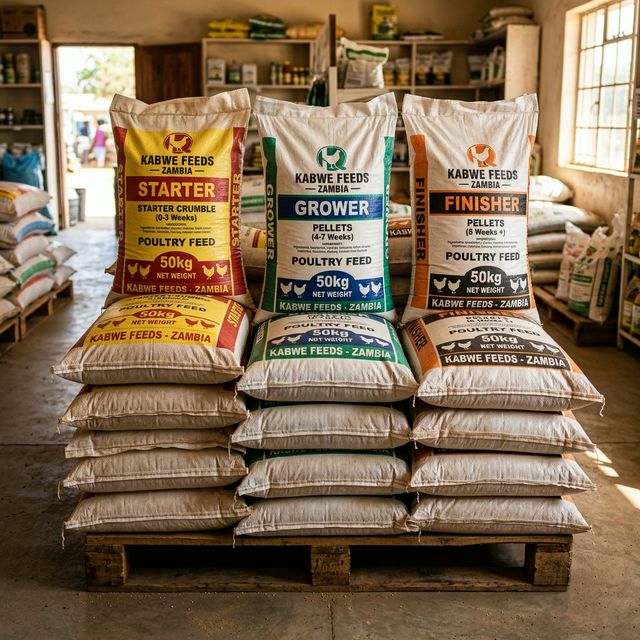
Broiler Feed Brand Comparison
Feed accounts for 60-70% of total broiler production costs. Choosing the right brand — or mixing your own — directly impacts profitability. Here is how the major Zambian feed brands compare in 2026.
| Brand | Starter (50kg) | Grower (50kg) | Finisher (50kg) | Protein |
|---|---|---|---|---|
| Tiger Animal Feeds Market leader, most widely available | ZMK 690 | ZMK 660 | ZMK 620 | 21–23% |
| Novatek Competitive quality, slightly higher price | ZMK 700 | ZMK 670 | ZMK 630 | 21–22% |
| National Milling (NMCZ) Government-linked, sometimes subsidized | ZMK 670 | ZMK 640 | ZMK 600 | 20–22% |
| Self-Mixed (DIY) Requires soya, maize, concentrates; needs knowledge of ratios | ZMK 550–600 | ZMK 520–570 | ZMK 480–530 | Variable |
* Self-mixing requires sourcing maize meal, soybean meal, fishmeal, and premix concentrates separately. Consult an animal nutritionist for correct ratios. Savings of 15-20% are possible but quality control is critical.
Cost of Rearing 100 Broilers
Complete budget breakdown for a small batch of 100 broiler chickens from day-old to market weight (6 weeks). Assumes an existing poultry house.
At ZMK 19/chick average
Fed for first 2 weeks
Fed weeks 2-4
Fed weeks 4-6
Newcastle + Gumboro + vitamins
Tube feeders and bell drinkers
Initial deep litter
First 2 weeks critical
* At a selling price of ZMK 120-150 per bird with ~90% survival rate, expected revenue is approximately ZMK 10,800-13,500. Profit margin depends on mortality rate and local market prices.
Cost of Rearing 500 Broilers
Full budget for a commercial batch of 500 broilers. This is the most searched budget size for Zambian farmers starting out.
At ZMK 19/chick average
Fed for first 2 weeks
Fed weeks 2-4
Fed weeks 4-6
Newcastle + Gumboro + vitamins
Tube feeders and bell drinkers
Deep litter for larger house
Multiple heat sources needed
Pole & iron sheets or brick, if building new
* At ZMK 120-150 per bird with ~90% survival rate (450 birds), expected revenue is ZMK 54,000-67,500. Profitability requires tight feed management and low mortality.
Layer Farming Costs (Egg Production)
Average prices for commercial egg production inputs. Many farmers opt to buy "Point of Lay" pullets to skip the risky brooding phase.
| Item | Estimated Price (ZMK) |
|---|---|
| Point of Lay Pullets (18 weeks) Ready to lay eggs | ZMK 180 – 220 per bird |
| Layer Mash / Feed (50kg) Daily feed for egg production | ZMK 480 – 550 |
| Empty Egg Trays (Bundle of 100) Packaging for wholesale | ZMK 150 – 200 |
Cost of Keeping 500 Layers
Complete startup budget for a 500-bird egg production operation using Point-of-Lay pullets.
At ZMK 200/bird average
~120g per bird per day
Pole & sheet or block construction
Bell drinkers and trough feeders
5-10 bundles of 100
Newcastle, deworming, vitamins
Bulbs or solar lights for consistent laying
💰 Revenue Potential (Monthly)
- • Daily eggs: 420-450 eggs (85-90% laying rate)
- • Monthly trays: ~420-450 trays of 30
- • Revenue: ZMK 42,000 – 54,000/month (at ZMK 100-120/tray)
- • Monthly costs: ZMK 16,000 – 18,000 (feed + miscellaneous)
- • Monthly profit: ZMK 26,000 – 36,000 (before depreciation)
- • Breakeven: 4-6 months from start of laying
Cost of Rearing Layers from Day-Old to Point-of-Lay
Buying point-of-lay pullets at ZMK 200/bird is convenient but expensive. Many experienced farmers rear layers from day-old chicks (ZMK 14/bird) to save significantly — but this requires 18 weeks of careful management. Here is the full cost breakdown for 500 birds.
At ZMK 14/chick average (Hy-Line, Lohmann)
Brooding phase, high protein
Moderate protein for development
Calcium boost before first egg
Newcastle, Gumboro, Marek's, fowl pox, deworming
Critical first 4 weeks
Deep litter or battery cage system
Chick feeders (small) + adult feeders
50 chicks lost on average; plan accordingly
📊 Day-Old vs Point-of-Lay Comparison
- • Point-of-Lay (500 birds): ZMK 100,000 (at ZMK 200/bird) — ready to lay immediately
- • Day-Old to Point-of-Lay (500 birds): ZMK 58,000–78,000 — saves ZMK 22,000–42,000 but takes 18 weeks
- • Risk: Day-old rearing carries 10% average mortality vs near-zero for POL pullets
- • Verdict: Day-old is more profitable if you have the experience and facilities; POL is safer for beginners
The Poultry Industry Landscape in Zambia (2026)
The Zambian poultry sector is highly competitive but faces pressure from fluctuating macroeconomic factors, primarily the cost of soybeans and maize — the two dominant ingredients in poultry feed. Feed providers like Tiger Animal Feeds and Novatek dictate market rates, and in recent years, poor rainfall impacting soybean harvests has driven feed prices upward.
Despite rising input costs, demand for chicken meat and eggs remains extraordinarily high, as it serves as the primary, most affordable source of animal protein in Zambia. Profitability for small to medium-scale farmers now relies heavily on strict biosecurity to prevent disease outbreaks and highly efficient feed management to ensure no wastage occurs during the 6-week growth cycle.
Key Success Factors
- Biosecurity: Keep your poultry house clean, restrict visitor access, and maintain a strict vaccination schedule. A single Newcastle disease outbreak can kill 80-100% of unvaccinated birds within days.
- Feed management: Use proper feeders to minimize waste. Feed accounts for 60-70% of total costs — even a 5% reduction in waste translates to significant savings.
- Market timing: Broiler prices peak during festive seasons (December, Easter) and harvest time. Plan your batches to mature during these high-demand periods.
- Record keeping: Track daily feed consumption, water intake, mortality, and growth rates. This data helps you identify problems early and optimize future batches.
Frequently Asked Questions
How much does a 50kg bag of poultry feed cost in Zambia?
As of 2026, broiler feed from leading brands like Tiger Animal Feeds and Novatek ranges from ZMK 610 to ZMK 700 per 50kg bag. Starter feed is the most expensive at around ZMK 690, while Finisher feed is slightly cheaper at around ZMK 620. Layer mash is generally cheaper, ranging from ZMK 480 to ZMK 550.
How much are day-old chicks in Zambia?
A day-old broiler chick (such as Ross or Indian River breeds) costs an average of ZMK 19. If you are buying from major hatcheries like Tiger Chicks, National Milling, or Hybrid, you often need to book and pay a 50% deposit in advance due to high demand.
Is poultry farming profitable in Zambia?
Yes, but margins are tight due to high feed costs (feed accounts for 60-70% of total expenses). Profitability depends heavily on maintaining excellent feed conversion ratios, minimizing mortality rates through strict biosecurity, and securing steady bulk buyers.
How many bags of feed do I need for 100 broilers?
To raise 100 broilers to a market weight of roughly 2kg (at 5-6 weeks), you will need approximately 14-16 bags of 50kg feed in total. This is usually split into 3-4 bags of Starter, 5-6 bags of Grower, and 6 bags of Finisher.
How much does it cost to rear 500 broilers in Zambia?
The total cost to rear 500 broilers from day-old chicks to market weight (6 weeks) is approximately ZMK 62,000 to ZMK 77,000. This includes chicks (ZMK 9,500), feed (ZMK 47,500), vaccines (ZMK 1,400), equipment (ZMK 2,000-3,000), and other costs. If you need to build a poultry house, add ZMK 5,000-15,000. At a selling price of ZMK 120-150 per bird, 500 broilers can generate revenue of ZMK 60,000-75,000.
How much does it cost to keep 500 layers in Zambia?
Starting 500 layers requires approximately ZMK 120,000-140,000 in initial capital (pullets ZMK 100,000, housing ZMK 15,000-35,000, equipment ZMK 4,000-5,000). Monthly running costs are around ZMK 16,000-18,000 (mainly feed at ZMK 15,000/month). At peak production (85-90% laying rate), 500 layers produce approximately 420-450 eggs daily. At ZMK 100-120 per tray of 30, monthly egg revenue is approximately ZMK 42,000-54,000.
Where can I buy day-old chicks in Zambia?
Major hatcheries include Tiger Chicks (Lusaka), National Milling Corporation, Hybrid Poultry Farm (Lusaka), Zamchick (Lusaka), and Ross Breeders. Most require advance booking (2-4 weeks) and a 50% deposit. During peak season (April-August), supply is tight and waiting lists are common. Some hatcheries deliver nationwide via bus.
Which is more profitable: broilers or layers?
Broilers offer quicker returns (6-week cycle) with lower initial investment, but the profit per cycle is modest and markets can be volatile. Layers require higher upfront capital (point-of-lay pullets are expensive) but provide steady daily egg income for 18-24 months. For beginners, broilers are recommended. For sustained income, layers are better. Many experienced farmers keep both.
What is the best broiler feed brand in Zambia?
Tiger Animal Feeds is the most widely available and trusted brand, with Starter at ZMK 690, Grower at ZMK 660, and Finisher at ZMK 620 per 50kg bag. Novatek is a strong competitor with slightly higher prices but consistent quality. National Milling (NMCZ) is sometimes cheaper and occasionally subsidized. Some experienced farmers self-mix feed using maize, soybean meal, and concentrates to save 15-20%, but this requires knowledge of proper nutritional ratios.
How much does it cost to rear layers from day-old to point-of-lay?
Rearing 500 layer chicks from day-old to point-of-lay (18 weeks) costs approximately ZMK 58,000-78,000. This includes day-old chicks (ZMK 7,000), feed through three phases — chick mash, grower mash, and pre-layer (ZMK 28,000), vaccines (ZMK 3,500), brooding equipment (ZMK 1,500), housing (ZMK 15,000-35,000), and feeders/drinkers (ZMK 3,000). Expect 10% mortality. This is cheaper per bird than buying point-of-lay pullets at ZMK 200/bird, but requires 18 weeks of management and carries higher risk.